loader-logo
Buy tickets

23 Feb

START 8:00 pm

Hungarian Night

Savaria Symphony Orchestra

Conductor:
GERGELY <br>MADARAS
GERGELY
MADARAS
Soloist:
Roby <br>Lakatos
Roby
Lakatos
Coca-Cola Arena

Dubai, UAE

BUY TICKET
BUY TICKET-btn

About

On Thursday 23rd February, InClassica welcomes the Savaria Symphony Orchestra to the Coca-Cola Arena, led by one of their own compatriots, Hungarian conductor Gergely Madaras, and joined by a group of legendary musician from their home nation – the virtuoso violinist Roby Lakatos, alongside Jeno Lisztes on the cimbalom, Vilmos Csikos on the double bass and Robert Szakcsi Lakatos on the piano. The musicians will start the evening with Composer-in-Residence Alexey Shor’s 13-movement cycle, Well Tempered Chanson, where they will be presenting a special arrangement of the contemporary composer’s work prepared by Roby Lakatos himself. Inspired by the folk music of the Soviet era, the cycle takes the cosmopolitan culture that developed in Odessa during the 1920s as a point of departure to undertake a musical journey, describing a time full of radical changes. With a fine sense of irony discernible in the reference to Bach, Shor reevaluates the urban romances, or ‘chansons’, that were looked down upon at the time, while borrowing from various baroque, classical and Latin American sources. After an interval, the orchestra returns with Tchaikovsky’s Symphony No. 5, a work on the subject of fate written in 1888. Despite the symphony’s modern popularity, public reaction following its premiere was somewhat muted, with the intricate work perplexing many contemporary critics. Nonetheless, it has gone on to become one of Tchaikovsky’s most popular works, replete with the composer’s rich and skillful orchestration, and widely seen as one of his most important compositions.


Programme

Alexey Shor

"Well-Tempered Chanson"

Pyotr Ilyich Tchaikosvky

Symphony No. 5


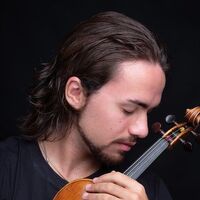
GERGELY MADARAS

Conductor

In the 2019/20 season Gergely Madaras begins his tenure as Music Director of the Orchestre Philharmonique Royal de Liège. As well as curating several series in Liège and at the Bozar in Brussels, his inaugural season includes three CD recordings, a continued collaboration with Mezzo HD as well as a tour to the Bucharest Enescu Festival. Gergely also continues as Chief Conductor of the Savaria Symphony Orchestra in his native Hungary, a post he occupies since 2014. He was previously music Director of the Orchestre Dijon Bourgogne from 2013-2019.

Having forged strong professional relationships throughout Europe, Gergely regularly appears as a guest conductor with orchestras including the BBC Symphony, Hallé, BBC Philharmonic, Orchestre Philharmonique de Radio France, Orchestre National de Lyon, Filarmonica della Scala, Maggio Muiscale Fiorentino, Orchestra Sinfonica Nazionale della RAI, Hungarian National Philharmonic and Hungarian Radio orchestras, the Copenhagen, Oslo, Bergen, Luxembourg and Warsaw National philharmonic orchestras as well as with the Scottish Chamber Orchestra, Münchener Kammerorchester and Academy of Ancient Music. Further afield, he has appeared with the Melbourne, Queensland and Houston Symphony orchestras.

Highlights of the 2019/20 season include Gergely’s debut with Netherlands Philharmonic at the Concertgebouw, where he will also make a second appearance for his Netherlands Radio Philharmonic debut in August 2020. Gergely has further debuts with BBC National Orchestra of Wales, Norwegian Radio Orchestra and the chamber orchestras of Lausanne and Geneva. Gergely returns once more to the Hallé for several UK appearances throughout the season. Other re-invitations include Philharmonia Orchestra, Orchestre National de Montpellier, BBC Scottish Symphony and the BBC Singers.

The previous season saw Gergely opening the 2018 Milano Musica Festival at La Scala, his debut at the Philharmonie de Paris with the Lucerne Festival Academy Orchestra, his debuts at the Barbican and Royal Festival Hall in London as well as Suntory Hall in Tokyo.

While Gergely is grounded in the core classical and romantic repertoire, he maintains a close relationship with new music. He has collaborated closely with composers Geroge Benjamin, Péter Eötvös, György Kurtág, Tristan Murail, Luca Francesconi and Pierre Boulez, for whom he served as assistant conductor at the Lucerne Festival Academy between 2011- 2013. He conducted over 100 works written after 1970, including many world premieres.

Gergely has also established a fine reputation as an opera conductor. In 2012 he was the inaugural Sir Charles Mackerras Fellow at the English National Opera. The fellowship culminated in his debut with the company, where he conducted Simon McBurney’s new production of Magic Flute at the London Coliseum. Since then he has conducted highly praised productions of Le nozze di Figaro, Die Zauberflöte, Otello, La traviata, La Bohème and Lucia di Lammermoor at such houses as the Dutch National Opera, Grand Théâtre de Genève (with Orchestre de la Suisse Romande) and Hungarian State Opera, among others. Prompted by a keen interest in re-discovering rarely performed works, Gergely has also conducted productions of Goldmark’s Ein Wintermärchen, Grieg’s Peer Gynt, Barber’s Vanessa, Donizetti’s Viva la Mamma and Offenbach’s Fantasio.

Born in Budapest in 1984, Gergely first began studying folk music with the last generation of authentic Hungarian Gipsy and peasant musicians at the age of five. He then went on to study classical flute, violin and composition, graduating from the flute faculty of the Liszt Academy in Budapest, as well as the conducting faculty of the University of Music and Performing Arts in Vienna. Besides his varied musical activities, Gergely retains a deep passion for Magyar music, and is an ambitious advocate of Bartók, Kodály and Dohnányi, both at home and abroad, having conducted nearly the complete orchestral repertoire of these composers.

Roby Lakatos

Violin

Roby Lakatos is not only a virtuoso on the violin, but also an extremely versatile musician who is equally adept to performing classical music, jazz and the folk idiom of his home country of Hungary. He is hard to define: most often, he is described as a Gypsy violinist, a devil’s fiddler, classical master, jazz improviser, composer and arranger – and his unique artistic personality is all that. He is a universal musician combining brilliant technique that makes him one of the best violinists in the world with creativity in improvisation and composing power.

Roby Lakatos was born in 1965 to a legendary family of Romani musicians as a member of the seventh generation of direct descendants to János Bihari - the famous “King of Gipsy Violinists”, who was admired by Ludwig van Beethoven, introduced Johannes Brahms to the themes for his Hungarian Dances and of whom Franz Liszt said: “The sweet tones drawn from his magic violin fell like drops of nectar on our enchanted ears.” From early childhood, Roby Lakatos lived with the musical tradition of his family – he played in his uncle Sándor and father Antal’s band and appeared as the first violinist of a Gipsy orchestra at the age of nine. Thus, he learned the tradition of violin technique and ornamentation at an early age, but also gained formal education at the Béla Bartók Conservatory in Budapest.

After winning the first prize for violin at the age of 19, he left for Belgium and first played in Liège, and then in the newly opened club Les Ateliers de la Grande Ile in Brussels, which quickly became a hotspot thanks to him and his ensemble. In the ten years of performing in the club, the ensemble attracted numerous fans: the shows were regularly visited by Sir Yehudi Menuhin, for example, and Roby made connections and collaborated with a number of musicians, including violinist Vadim Repin and his role model for violin jazz music performances Stéphane Grappelli.

His concert career developed gradually, and now Roby Lakatos spends most of his time performing in various stages around the world. His ensemble has appeared, among other places, at the Schleswig-Holstein Festival, in Académies Musicales de Saintes, Ottawa Chamber Music Festival, Ludwigsburg Schloßfestspiele and the Helsinki Festival, as well as in prestigious concert halls (Santa Cecilia in Rome, Concertgebouw in Amsterdam, Zankel Hall – Carnegie Hall in New York). His versatility has given him and his ensemble the opportunity to collaborate with major orchestras–The London Symphony Orchestra, French National Radio Orchestra, Dresden Philharmonic Orchestra, to name a few – as well as with numerous exceptional artists, including Giora Feidman, Herbie Hancock, Joshua Bell, Maksim Vengerov, Nigel Kennedy and Randy Brecker. In Hong Kong, Taiwan and Japan he first performed in 1999, and has since been regularly playing in Asia. He records for Hungarian and Belgian television networks and has also appeared on German television and German national radio stations, as well as on BBC in London.

Roby plays a violin made by Fabien Gram.

Seven years after the release of their 1991 album Gypsy Style for MW Records, The Roby Lakatos Ensemble recorded their first CD for Deutsche Grammophon, titled Lakatos. With a presentation of a unique style, which is a fusion of typical Gipsy music elements and jazz with improvisation as an important feature and specific technical effects, some of which he created himself (such as the fascinating left-hand pizzicato), Roby Lakatos and his ensemble also reflected a universal approach to the musical material by including on their CD the works by composers ranging from Zoltán Kodály and Johannes Brahms to John Williams’s music for Schindler's List and Charles Aznavour’s chanson La Bohème. This album, which received the prestigious German Echo Klassik award, was followed by four more releases for Deutsche Grammophon: Lakatos Gold and Post Phrasing (1998/1999), Live From Budapest (1999), and As Time Goes By (2002) offering an equally exciting combination of jazz and Gipsy music idioms with contemporary and classical elements. Apart from recording for other labels – With Musical Friends (Universal, 2001), Kinoshita Meets Lakatos (Prime Direction, Inc., 2002), Prokofiev... (Avanticlassic, 2005), Fire Dance (Avantijazz, 2005) and Klezmer Karma (Avanticlassic, 2006) – Roby Lakatos also started his own label Lakatos Recording Company to present somewhat different music, i.e. experimental works such as the project named The Legend of the Toad (2004), which is a sort of musical story told through his performances and the performances of his ensemble whose member, pianist Kálmán Cséki, also arranged the music.
Except for his long-time associate, violinist Lászlo Bóni, Roby Lakatos’s ensemble today is composed of young virtuoso musicians with classical musical education who are also well versed in the folklore tradition of Hungarian Gypsies.

From 2020, Roby Lakatos is Artist Ambassador of the International Yehudi Menuhin Foundation.

Savaria Symphony Orchestra

The Savaria Symphony Orchestra, founded in 1962, has become one of the most significant representatives of Hungarian music in the past few years. Its repertoire includes classical and romantic compositions and music from the 20th century. Besides performing as a symphony orchestra, the musicians of the ensemble frequently feature at opera galas of very high artistic standard. The orchestra regularly performs at various Hungarian and international festivals including International Bartók Festival and Seminar and the Iseum Festival. For its outstanding quality of work, the orchestra received the Béla Bartók-Ditta Pásztory Award in 1990.

The Savaria Symphony Orchestra is also renowned for being a successful performer of contemporary music. To acknowledge this fact, and to reward its remarkable success in performing and popularising Hungarian musical compositions, the orchestra was awarded the prize offered by the ARTISJUS Foundation of Music in 2001. The professional artistic standard represented by the orchestra is justified by a series of concerts broadcast in the radio, on TV and on LPs. The orchestra is well known all over Europe. It has performed in France, Germany, The Netherlands, Slovakia, Luxembourg, Switzerland, Ireland, Turkey, Italy and other countries of Europe, as well as in South Korea. In the towns and cities of Austria they perform on a regular basis.

The artistic leader and chief conductor of the orchestra is Gergely Vajda, whose professionalism, both as composer and conductor, is acknowledged in Europe and in the United States of America.

calendar

UPCOMING CONCERTS

22

Feb

START

8:00 pm

Imperial Piano from Seoul

On Wednesday 22nd February, the 2023 InClassica International Music Festival shall welcome one of the most exciting musicians in the world today to the

YEOL EUM SON
Daniel Raiskin
arrow icon

21

Feb

START

8:00 pm

Clarinet from La Scala

The Savaria Symphony Orchestra join up with their former Chief Conductor, Gergely Madaras, once again on Tuesday 21st February, as they continue their

GERGELY MADARAS
Fabrizio Meloni
arrow icon